


Farmers face the problem of various diseases with the gradual change in weather parameters
towards warm humid conditions from March-April onwards. To sensitize the farmers about organic management of crop plant diseases thereby maintaining
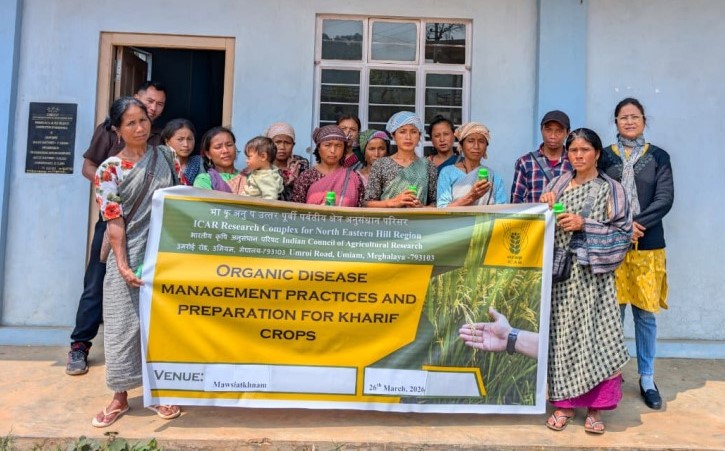
ecological balance and healthy environment, training was successfully conducted on 26th March 2026. The one day training on “Organic disease management
practices and preparation for kharif crops” was organized at Mawsiatkhnam Village of East Khasi Hills District under the Farmers’ FIRST Project by the
Division of Technology Assessment and Capacity Building, ICAR-RC-NEH Region. The training was led by Dr. Tasvina R. Borah, Senior Scientist (Plant Pathology),
who appraised the farmers about the organic management practices for crop disease management, like use of biocontrol agents and the different bio formulations,
integration of cultural and good agricultural practices for ecofriendly management of diseases as well as prophylactic measures to prevent disease development.
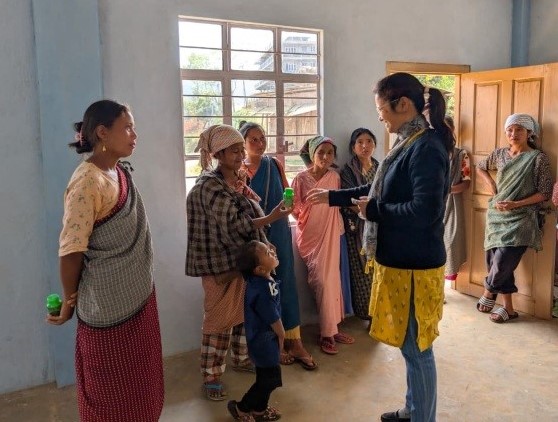
Practical demonstrations on the preparation of Bordeaux mixture were showed to the farmers and were made aware about the do’s and don’ts to followed with the use
of Bordeaux mixture. Further, demonstration on use of bio formulations for seed and seedling treatment was also conducted. Farmers actively participated in the activities
and interacted with great enthusiasm and curiosity to understand about the different symptoms of fungal, bacterial and viral infections on plants. The farmers expressed their
satisfaction in understanding the importance of organic management of plant diseases for sustainable agriculture and maintaining healthy environment for all.
The day long programme proved to create sensitizing and awareness amongst the farmers to adopt only organic inputs and
organically permitted chemicals judiciously in the kharif season. The training was coordinated by Dr. Tasvina R. Borah (Sr. Scientist & Co-PI), Dr. N. Uttam Singh (Sr. Scientist & PI),
Dr. M. Bishonath Singh (SRF) and Ms. Ibanrishisha Ksoo (YP I).
 |
 |